National Military Park - For more information on historic sites and structures (including most GNMP monuments), see the Gettysburg Battlefield Historic District.
The 2008 sign for PA 134 (west) Visitor Cter trance is a rustic National Park Service structure built to look like the base walls and columns are made of Gettysburg granite, a material quarried locally in structures during the Battle of Gettysburg.
National Military Park

39°48′31″N 77°14′12″W / 39.80861°N 77.23667°W / 39.80861; -77.23667 Coordinates: 39°48′31″N 77°14′12″W / 39.80861°N 77.23667°W / 39.80861; -77.23667
Gettysburg National Military Park Museum & Visitor Center
Gettysburg National Military Park preserves and interprets the scene of the Battle of Gettysburg in 1863 during the American Civil War. Located in Gettysburg, Pennsylvania, the park is managed by the National Park Service.
GNMP properties include most of the Gettysburg Battlefield, many combat support areas during the conflict (such as reserves, supply sites, and hospitals), and several other non-combat areas related to the "aftermath and commemoration" of the battle, including Gettysburg National Cemetery.
Many of the 43,000 American Civil War artifacts are on display at the Gettysburg Museum and Visitor Center.
The park is more forested than it was in 1863, and the National Park Service has an ongoing program of restoring parts of the battlefield to their historic treeless state, as well as replanting historic orchards and woodlands that are now missing. roadsides to improve habitat as well as create a historic landscape. There are also more roads and facilities for tourists visiting the battlefield park.
The History Of Living History At Gettysburg National Military Park
Attendance in 2018 was 950,000, down 86% from 1970. The five major Civil War-era battlegrounds operated by the National Park Service (Gettysburg, Antietam, Shiloh, Chickamauga/Chattanooga, and Vicksburg) had a combined 3.1 million visitors in 2018, down 70% from 10.2 million in 2018. in 1970.
The 1864 Gettysburg Battlefield Memorial Association and later veterans associations have purchased land for memorials and preservation (such as the 72nd Pennsylvania Infantry Monument tract with the memorial statue featured on the America the Beautiful quarter in 2011). Federal acquisition of the land that would become a national park in 1895 began on June 7, 1893, with nine 625-square-foot (58.1 m) monument lots.
In addition to land purchases, federal eminent domain included the right-of-way of the Gettysburg Electric Railroad in 1917 (cf. 1896 United States v. Gettysburg Electric Ry. Co.). The land donation included 160 acres from the 1959 Gettysburg Battlefield Association and 264 acres (107 ha) from the W. Alton Jones Foundation.

The Gettysburg Foundation is a 501(c)(3) nonprofit philanthropic educational organization that works in partnership with the National Park Service to preserve Gettysburg National Military Park and Eischauer National Historic Site and to educate the public about their importance.
Exploring Chickamauga And Chattanooga National Military Park In Lookout Mountain
(for example, the Foundation raised funds and built a new Museum and Visitor Center, which opened in 2008, and received funds for a new gun shop, which maintains approximately 400 guns on a daily basis that block the actual artillery lines on the battlefield. In addition, The Gettysburg Foundation has provided approximately $20 million in direct support to the National Park Service since 2009. The Visitor Center is home to the Gettysburg Museum of the American Civil War and the 19th Century Circle Drawing Gettysburg Cyclorama)
The park officially came under federal control on February 11, 1895, through a law entitled "An Act to Establish a National Military Park at Gettysburg, Pennsylvania." This legislation officially authorized the transfer of the deed to the park from the Gettysburg National Battlefield Memorial Park Association to the Secretary of War.
In February 2009, the David Wills House, where Lincoln wrote his Gettysburg Address, was added to the national park under Public Law 106-290 and is administered by the Gettysburg Foundation.
The park is a very symbolic place for memories and remembrance. On November 19, 1963, a parade and ceremony was held in Gettysburg to commemorate President Lincoln's Gettysburg Address, less than five months after the Battle of Gettysburg. Actor Raymond H. Massey, who plays President Lincoln, arrives on an 1860s steam locomotive at Gettysburg Station. He rode, like Lincoln, on horseback to the National Cemetery, where the actor Massey delivered the famous presidential speech (this time, for brevity, Edward Everett's earlier two-hour speech was omitted). The parade followed the same route that President Lincoln and Gov. Andrew G. Curtin 100 years ago. Former President Dwight D. Eischauer, who lives nearby, was there with the governor. William W. Scranton. In 1963, attendance was smaller than the 20,000-30,000 people who attended President Lincoln's inaugural address in 1863. Thousands of photographers attended the event in 1963 as the US aircraft. The Air Force overreached. The 28th Division of the Pennsylvania National Guard, led by Maj., also attended the event. Mr. Chris F. Flack, USA Marine Band and 3rd Infantry Regiment (Old Guard) USA. Army. The parade ended with a trance at Gettysburg National Cemetery.
Manassas National Battlefield Park
It was not until the installation of the Gerald Lee Monument in 1917 that a Confederate memorial was included, which at first took the form of individual monuments symbolizing a particular Confederate state.
Gettysburg National Military Park is located in the North Atlantic-Appalachian region, also known as the Northeast region.
As Gettysburg National Military Park grew in popularity, it experienced environmental changes brought about by that popularity and natural causes.
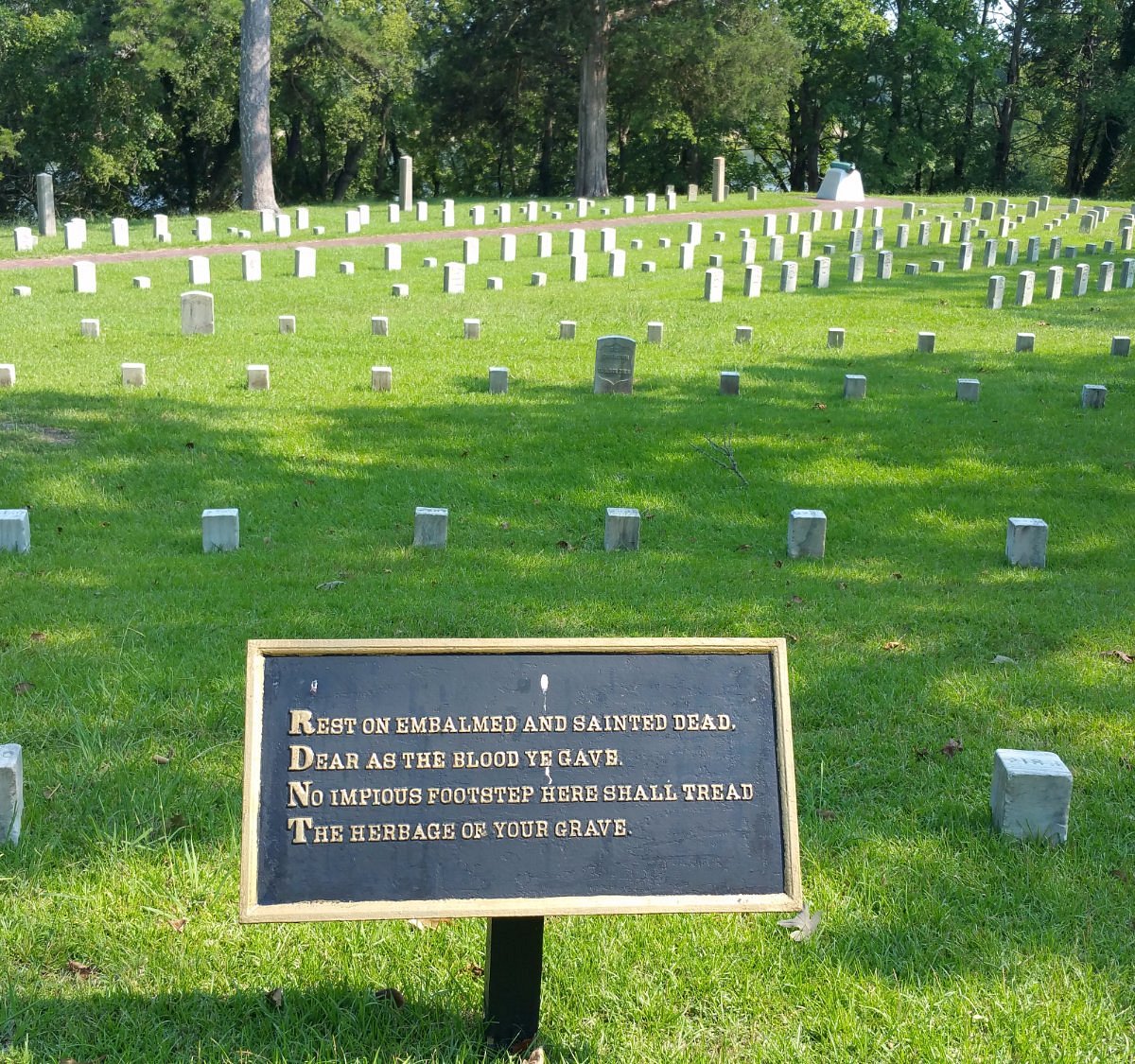
An estimated 2 million people visit the park annually, and the large influx of visitors raises concerns about its environmental impact. Natural areas such as forests, thickets, and wetlands are under stress from traffic-induced pollution and the problem of invasive species that threaten the park's ecology. After a delicious morning meal, the owner of the Baer House Inn in Vicksburg, Mississippi, gave me an audio guide to borrow for my car when I told him I was going to Vicksburg National Military Park, just a 10-minute drive from downtown and its architectural values.
Visiting Vicksburg National Military Park
On the way there I thought about the background of what happened here in 1863. Landmark Vicksburg, atop a bluff, was the site of one of the bloodiest (and one of the most decisive) battles of the Civil War with Union General Ulysses S. Grant eventually defeating Confederate Lt. General Pemberton in some utterly suicidal terrain. The city withstood a 47-day siege (during which the inhabitants lived in caves) and finally surrendered on July 4.
Founded in 1899 to commemorate the siege and defense of Vicksburg, the park today covers nearly 2,000 peaceful acres. Walkers, joggers, hikers, and cyclists will appreciate the morning and afternoon hours specifically designated for them when cars are prohibited on the roads surrounding the park. But if you're in the car, you'll take a 16-mile one-way bike ride that takes in many of its highlights, including the battlefields, the only surviving wartime structure in the park, and some of the more than 1,400 monuments, tablets and markers , which earned the park the title of "world's largest outdoor art gallery."
I started with the Memorial Arch, a granite memorial in Georgia dedicated to the "National Association of Union and Confederate Civil War Veterans of October 16-19, 1917." One of the main features of the park is all the other monuments and memorials, and you'll often get out of your car to see them up close. Their different sizes and shapes — some classic, others modern; some small and simple, others large and grand - as well as the objects of their veneration provide a wonderful variety, but all are elaborate and attractive to the eye.
Among the individual memorials, I saw statues of Pemberton without a weapon, Grant on horseback, and Confederate President Jefferson Davis with a flag. Less well known, but no less important, include the US. Navy Admiral David Glasgow Farragut (with the "torpedo curse in full swing") and Lt. Gen. Stephen Lee, who became the founding president of Mississippi State University. The nation's first monument to African-Americans who fought in the Civil War depicts three black men on a plinth of black African granite -- on the left, a Union soldier leans forward toward the freedom the war ushered in; field hand on right looks back at decades of slavery coming to an end. Both support a figure between them, a wounded Union soldier, symbolizing the sacrifices made by African Americans during the war.
School Trip Spotlight: Gettysburg National Military Park
I was especially impressed by the state memorials. Almost every state that participated in the Civil War (Delaware, Maine, New Jersey, and Vermont seem to be absent) is represented by a monument, the only exception being Ohio, which chose to erect 39 smaller monuments, one for each unit. who participated in the Vicksburg Campaign.
Monuments for the remaining 29 states vary greatly in form. Alabama, for example, consists of a sculptural group of seven inspired soldiers
Military drone range, laser range finder military, military range bags, military range targets, long range military radio, military radio range, military range finder, military long range binoculars, range rover military discount, military range rover, range of military drones, military range bag
0 Comments